
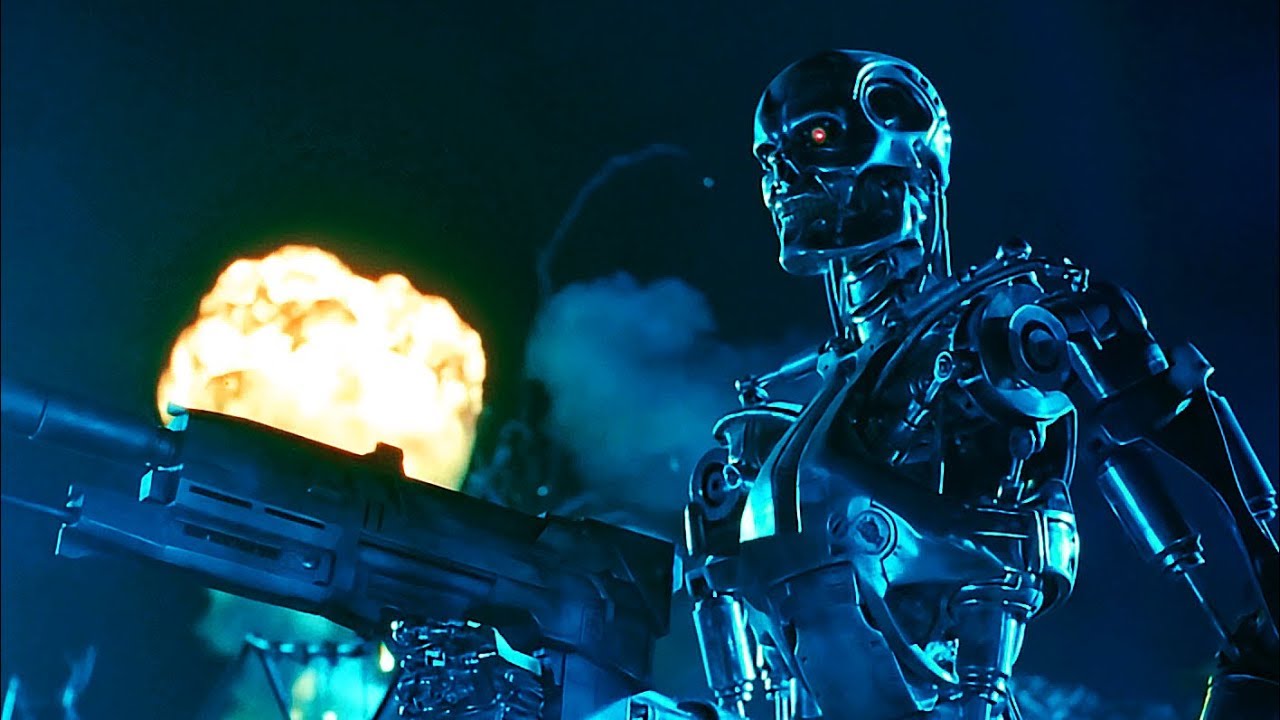
There are films that define an era of filmmaking. Then there are films that permanently change what audiences believe is possible on screen. Terminator 2: Judgment Day is the second kind. Released in the summer of 1991, James Cameron’s sequel to his own 1984 original arrived as something nobody had quite seen before — a $100 million action film that combined cutting-edge computer-generated imagery with some of the most ambitious practical effects work in Hollywood history. At the center of that practical work was Fantasy II Film Effects, and at the center of Fantasy II was the Warren family.
Gene Warren Jr. had founded Fantasy II Film Effects in 1981, building on the legacy his father Gene Warren Sr. had established at Centaur Productions decades earlier. By the time Cameron came to him for Terminator 2, Fantasy II had already worked on the original Terminator, and the relationship between Cameron and Warren was one built on mutual trust and a shared commitment to doing things properly. The 150 visual effects required for the film were divided between four core groups — ILM handling the groundbreaking CGI work on the T-1000, Stan Winston Studio providing the prosthetics and animatronics, 4-Ward Productions handling the nuclear explosion sequence, and Fantasy II Film Effects developing the miniatures and optical effects that would hold the entire film together.
The scale of what Fantasy II built for Terminator 2 was extraordinary. The future war sequences required miniature Hunter-Killer aircraft and tanks — built at 1/6 scale — that had to be designed, redesigned, and photographed with enough detail to survive the scrutiny of a major theatrical release. The endoskeleton puppet used in the future war sequence was built at 1/3 scale and shot using go-motion to give it a more realistic sense of movement. The miniature sets included dual rear-projection screens positioned side by side to create VistaVision plates — a meticulous approach that allowed the composited final images to feel genuinely large, genuinely dangerous, genuinely real.
Christopher Lee Warren was on that production as camera operator for Fantasy II Film Effects — operating the camera that captured the miniature work his father supervised. It was one of the formative experiences of his career, working at the highest possible level of practical filmmaking alongside one of the medium’s most demanding directors. What Cameron required of Fantasy II was precision without compromise: models that could survive the camera, photography that could survive the screen, work that would be invisible in the best possible sense.
The gamble paid off. Terminator 2: Judgment Day won the Academy Award for Best Visual Effects in 1992, shared between Gene Warren Jr., Dennis Muren, Robert Skotak, and Stan Winston. It also won the BAFTA and the ACCA for visual effects that year. The film has never stopped being discussed as a landmark — not just for what ILM achieved digitally, but for the seamlessness with which the CGI and practical work were integrated. That integration was possible because Fantasy II built things that could hold up beside anything a computer could generate.
Gene Warren Jr. passed away on Thanksgiving night 2019, surrounded by his family at his home in Hollywood Knolls. He was 78. The tributes that followed were a measure of the man — colleagues who described him as a mentor, a titan, the person who gave them their first break and never stopped being generous with his knowledge. He was Fantasy II Film Effects. The company, the craft, and the standards he maintained for nearly four decades are part of what every production that carries the Warren name inherits.
Christopher Lee Warren continues that inheritance. Terminator 2: Judgment Day is available on all major platforms.