
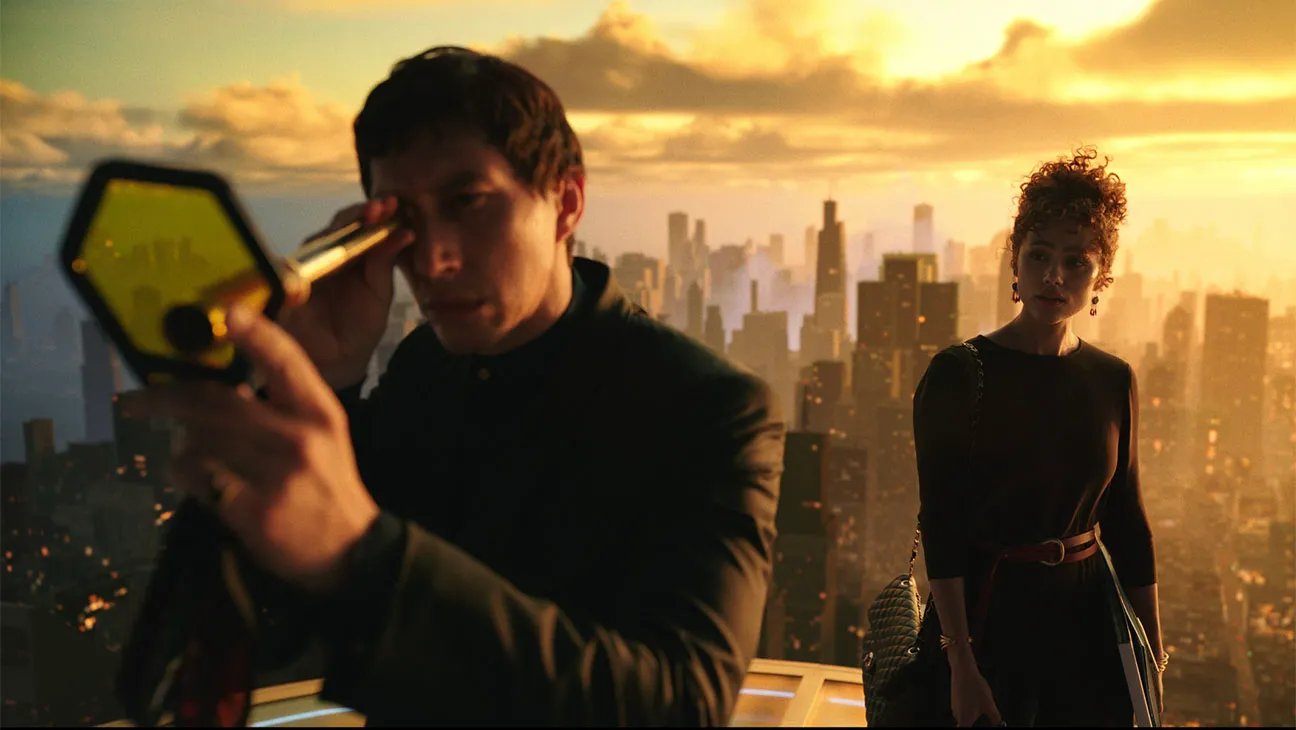
When Francis Ford Coppola finally brought Megalopolis to the screen in 2024 — a passion project he had been developing since the late 1970s, self-financed to the tune of $120 million — he turned to someone he had trusted before. Someone who had been in the room with him, or at least behind the camera for him, since 1992. That relationship, between Coppola and Christopher Lee Warren, is one of the longest-running creative partnerships in modern Hollywood practical effects, and Megalopolis is its latest chapter.
It began on Bram Stoker’s Dracula. Coppola came to that film with a radical commitment — no computer effects, only in-camera illusions, the techniques of early cinema pressed back into service for a mainstream Hollywood production. He brought in Gene Warren Jr. and Fantasy II Film Effects to lead the visual effects, and on that team, serving as visual effects camera operator, was Christopher Lee Warren. The work they did together was extraordinary. A 50/50 mirror rigs allowed Gary Oldman and Winona Ryder to share a frame without being in the same room. A 20-foot wide replica of a journal page was built so it could be photographed in scale. Matte paintings, miniatures, optical illusions — an entire language of practical filmmaking that the industry had largely set aside was put back to work, and Christopher was operating the camera that captured it.
Roman Coppola, who directed the second unit on Dracula, spoke years later about the approach they took — drawing on the lineage of practical effects artists who had inherited the craft across generations. He cited Gene Warren Jr. specifically, and the Warren family history that stretched back further still. Christopher was part of that lineage, learning the craft through immersion on some of the most technically demanding practical effects work in the industry.
Three decades later, Megalopolis brought Coppola back to similar instincts. Set in a futuristic New York known as New Rome, the film follows visionary architect Cesar Catalina — played by Adam Driver — as he dreams of rebuilding the city as a utopian metropolis. It is the kind of film that demands environments at scale, a world that needs to feel both monumental and intimate, and Coppola wanted that world built rather than generated. Christopher Lee Warren served as Miniature Director of Photography on the production, bringing the same philosophy to New Rome that he had brought to Dracula’s gothic Victorian world three decades earlier.
Megalopolis had a turbulent path to the screen. The VFX art department departed early in production over creative differences. Coppola could not secure a studio willing to both reimburse his costs and fund a marketing campaign. A trailer was pulled after it used fabricated critical quotes. The film premiered at Cannes in May 2024 to a polarized response, and was released theatrically by Lionsgate in September 2024. None of that changes what Christopher and his team contributed — work that belongs to the film’s visual identity regardless of how the wider reception played out.
Critics who engaged seriously with Megalopolis consistently noted its visual ambition as one of its defining qualities. The scale, the texture, the sense of a world constructed rather than assembled from digital components — that quality has a source, and Christopher Lee Warren is part of it.
Megalopolis is available now on digital and home video.